How to Create an SEO Strategy in 2026: A Practical Guide for Growing Businesses
Publishing blogs, adding keywords and updating website pages are common SEO activities. But without a clear plan, these activities may not contribute to meaningful business growth.
A company might publish ten articles without targeting the questions its customers actually ask. Another might invest in website redesign while overlooking technical problems that prevent important pages from appearing in Google Search.
Understanding how to create an SEO strategy helps businesses connect their marketing efforts with measurable goals.
For companies operating in LB Nagar, Dilsukhnagar, Gachibowli, Madhapur, Kukatpally, Hitech City and across Hyderabad, a structured SEO strategy can help prioritize the right improvements instead of spending time on disconnected activities.
This guide explains how to research search demand, audit your website, organize keywords, develop content, improve technical SEO and measure organic business performance in 2026.

How to Create an SEO Strategy in 2026
To create an SEO strategy, define your business goals, audit your website, research customer search intent, prioritize relevant keywords, improve technical SEO, publish helpful content and measure results using reliable data.
A practical process includes:
- Set business and SEO objectives.
- Review existing website performance.
- Identify your target customers.
- Research relevant search queries.
- Study competing search results.
- Organize website pages and topics.
- Improve content and technical SEO.
- Develop relevant local visibility.
- Measure traffic, enquiries and conversions.
- Update the strategy based on evidence.
Featured Snippet Answer: An SEO strategy is a structured plan for improving a website’s visibility in relevant organic search results. It combines keyword research, search intent, website architecture, content development, technical SEO, authority building and performance measurement to support business goals.
What Is an SEO Strategy?
An SEO strategy is a documented approach to improving how a website is discovered, understood and used through organic search.
It establishes which audiences and search topics matter, what improvements are needed and how progress will be evaluated.
An SEO strategy is different from an individual SEO task.
For example, optimizing a title tag is a task. Identifying which service pages deserve priority, improving their content and measuring the resulting enquiries is part of a broader strategy.
The best strategy is not necessarily the most complicated. It is the one a business can realistically implement, maintain and measure.
Why Does Your Business Need an SEO Strategy?
SEO involves many interconnected activities.
Without prioritization, businesses may invest resources in tasks that have limited relevance to their customers.
A documented strategy helps:
- Connect SEO work with business objectives
- Identify important search opportunities
- Reduce duplicate or unnecessary content
- Prioritize technical improvements
- Coordinate content and website development
- Set realistic expectations
- Measure progress consistently
For example, a professional services company in Gachibowli may benefit more from improving its core service pages than publishing unrelated informational articles.
A local business in LB Nagar may need to correct its business information and strengthen relevant local content before expanding into broader national topics.
1. Define Measurable SEO Goals
Start by identifying what the business wants organic search to accomplish.
Different businesses have different priorities.
Examples of SEO goals
- Increase qualified service enquiries
- Improve visibility for relevant services
- Attract visitors to important product pages
- Increase consultation requests
- Improve local customer discovery
- Reduce dependence on paid acquisition over time
Avoid setting goals based only on total website traffic.
Traffic from unrelated searches may not contribute to business growth.
Define useful performance indicators
Depending on the business, indicators may include organic clicks, qualified form submissions, relevant calls, bookings or completed purchases.
Record the starting position before making changes so later comparisons are meaningful.
2. Audit Your Existing Website
A website audit helps identify problems and opportunities before new SEO work begins.
Review the website from both a search engine and customer perspective.
Technical audit
- Indexing status
- Crawl accessibility
- Broken links
- Canonical settings
- Mobile usability
- Page performance
- HTTPS configuration
- XML sitemap
Content audit
- Important service pages
- Outdated information
- Thin or incomplete content
- Overlapping search intent
- Missing internal links
- Unanswered customer questions
Use Google Search Console to review indexing information, search queries and existing organic performance.
Not every warning requires the same level of attention. Prioritize problems affecting important pages and customer journeys.
3. Understand Your Target Audience
SEO should begin with real customer needs rather than a list of popular keywords.
Consider who purchases your services, what problems they face and how they evaluate providers.
Questions to research
- What does the customer need?
- Which problems are they trying to solve?
- What questions arise before purchasing?
- Which locations do you genuinely serve?
- What information builds confidence?
- What prevents customers from enquiring?
A website development company may serve business owners who want a professional website, while a technical consulting company may serve customers looking for specialized expertise.
These audiences require different content and conversion experiences.
4. Conduct Keyword Research Based on Search Intent
Keyword research identifies the language people use when searching for information, products and services.
However, search volume alone does not determine whether a keyword is valuable.
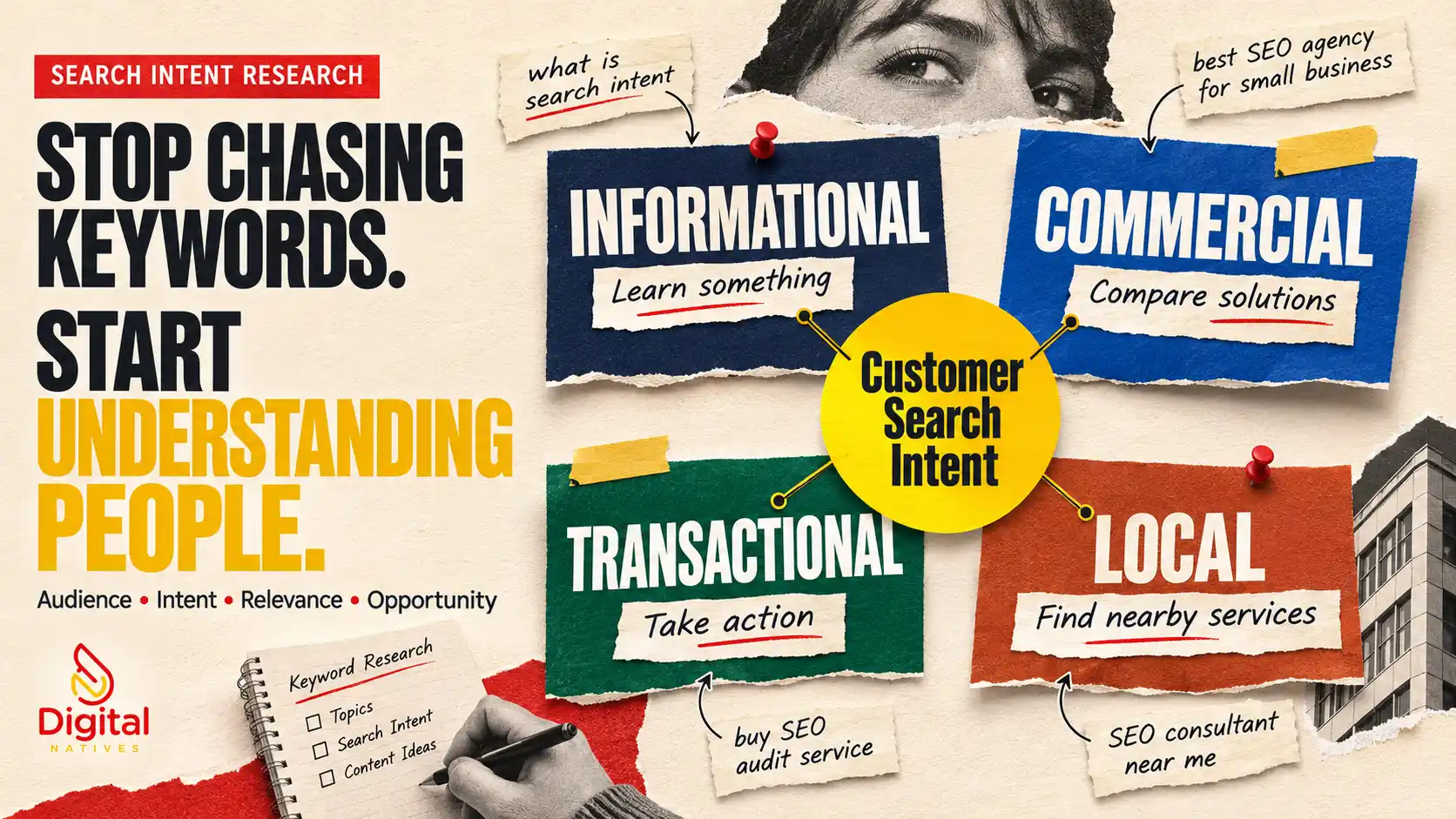
Informational intent
Example: How does SEO work?
The customer wants to learn.
Commercial investigation
Example: SEO agency versus in house SEO team.
The customer is comparing approaches.
Transactional intent
Example: SEO services Hyderabad.
The customer may be looking for a provider.
Local intent
Example: Website development company in LB Nagar.
The customer is searching within a specific geographic context.
Group keywords by their meaning and intended destination page.
Avoid creating multiple pages that serve essentially the same search intent.
5. Analyze Your Organic Search Competitors
Your organic search competitors may not be identical to your direct business competitors.
A search results page may include agencies, directories, publishers, educational websites and other types of resources.
Review which pages appear for important queries and ask:
- What information do these pages provide?
- Which questions do they answer?
- What type of content matches the search intent?
- What useful information is missing?
- How can our page provide original value?
Competitor research should help identify customer expectations.
Do not copy content, fabricate expertise or imitate tactics that violate search engine policies.
6. Plan a Logical Website Architecture
Website architecture describes how pages are organized and connected.
A clear structure helps visitors navigate services and helps search engines discover related information.
Example structure for a digital marketing company
- Homepage
- SEO services
- Website development services
- Google Business Profile services
- Content marketing resources
- Blog
- Contact page
Supporting articles can connect to relevant service pages when the relationship is useful.
Use descriptive navigation labels and internal links.
Important pages should not depend on complicated navigation paths to be discovered.
7. Build an SEO Content Strategy
A useful content strategy explains what to publish, why the topic matters and how the content supports customers.
Start with subjects closely connected to the business’s expertise.
Build topic clusters
A topic cluster connects a central subject with detailed supporting resources.
For example, a local SEO cluster may include articles about Business Profile optimization, customer reviews, Google Maps, local citations and performance measurement.
Each article should address a distinct question.
Create a content calendar
Plan content according to business relevance, customer demand and available resources.
A realistic publishing schedule is more useful than an ambitious schedule that produces repetitive or low quality articles.
Demonstrate experience
Use original examples, practical explanations, relevant professional knowledge and trustworthy sources.
Google’s helpful content guidance emphasizes creating reliable content primarily for people.
8. Improve On Page SEO
On page SEO helps communicate the purpose and structure of individual website pages.
Review:
- Page titles
- Main headings
- Descriptive subheadings
- Useful page content
- Relevant internal links
- Image alternative text
- Meta descriptions
- Clear customer actions
Include important search terminology naturally.
Avoid repeating the same keyword excessively or adding irrelevant location names.
Each important page should provide a distinct and useful answer to its intended audience.
9. Strengthen Technical SEO
Technical SEO supports the discovery, accessibility and usability of website content.
Important areas include:
Crawlability and indexing
Ensure important pages can be discovered and are not unintentionally blocked from indexing.
Mobile usability
Use responsive layouts, readable typography and accessible navigation.
Core Web Vitals
Review loading performance, responsiveness and visual stability.
Structured data
Where relevant, implement accurate structured data that matches visible website information.
Website security
Maintain HTTPS, appropriate software updates and reliable access controls.
Review Google’s SEO Starter Guide for foundational practices.
10. Develop a Local SEO Strategy for Hyderabad
Businesses serving customers in specific locations should include genuine local relevance in their SEO planning.
For eligible businesses, Google Business Profile can support discovery through Google Search and Maps.
Review:
- Accurate business information
- Relevant business categories
- Genuine services
- Operating hours
- Authentic photographs
- Customer reviews
- Website relevance
Google identifies relevance, distance and prominence as the primary factors influencing local results.
Local planning examples
A service provider in Dilsukhnagar may prioritize relevant local service information and accurate contact details.
A B2B company in Hitech City may focus on detailed commercial service pages and professional expertise.
A business serving customers across Kukatpally, Madhapur and Gachibowli should describe its genuine coverage without inventing additional office locations.
Local SEO should reflect how the business actually operates.
11. Build Genuine Business and Website Authority
Authority building should focus on earning trust and relevant recognition.
Useful activities may include:
- Publishing original research
- Sharing real project experience
- Participating in relevant professional communities
- Receiving legitimate industry mentions
- Developing useful educational resources
- Building genuine business relationships
Do not purchase manipulative links or use artificial link schemes.
Strong SEO should support the real reputation of the business rather than create misleading signals.
12. Measure SEO Performance and Business Results
SEO measurement should connect search visibility with meaningful customer outcomes.
Useful tools include Google Search Console and appropriately configured website analytics.
Important SEO metrics
- Organic search impressions
- Organic clicks
- Relevant search queries
- Landing page performance
- Indexing status
- Qualified enquiries
- Form submissions
- Bookings or purchases
Evaluate changes across comparable periods and consider seasonality, competition and website changes.
Do not treat every increase in traffic as evidence of business growth.
Where possible, connect enquiries to actual customers and revenue.
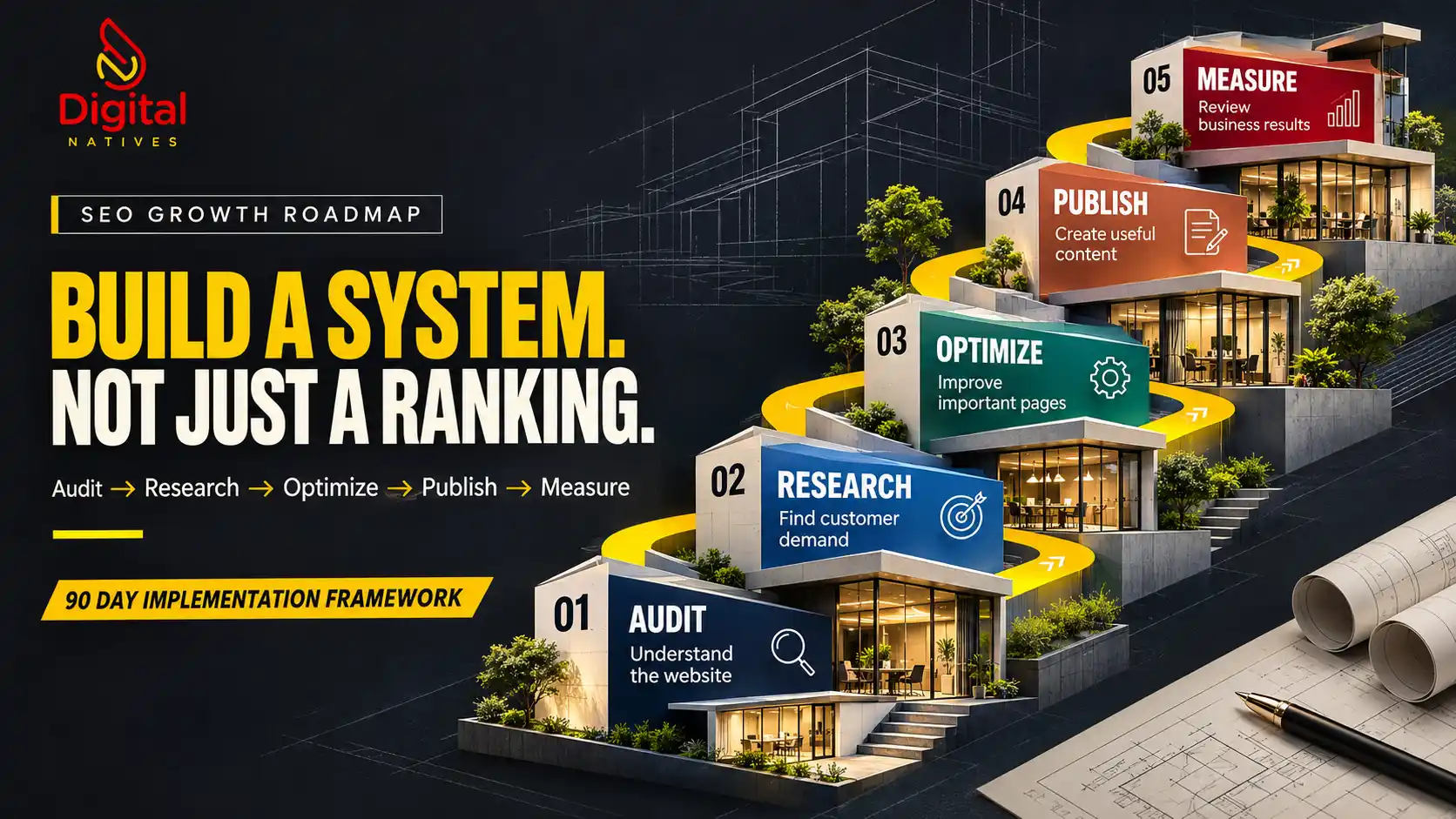
A Practical 90 Day SEO Strategy Roadmap
A 90 day plan can help businesses organize implementation, although SEO results are not guaranteed within that period.
Days 1 to 30: Research and Foundation
- Define business goals
- Audit the website
- Review Search Console
- Research relevant keywords
- Analyze search competitors
- Identify priority technical issues
Days 31 to 60: Implementation
- Improve important service pages
- Correct priority technical issues
- Strengthen website navigation
- Publish useful supporting content
- Review local business information
- Implement conversion tracking
Days 61 to 90: Review and Improve
- Review indexing and organic search data
- Evaluate content performance
- Improve weak customer journeys
- Update internal links
- Review qualified enquiries
- Prioritize the next phase of SEO work
Common SEO Strategy Mistakes to Avoid
- Starting SEO without business goals
- Targeting only high volume keywords
- Ignoring customer search intent
- Publishing repetitive content
- Creating duplicate service pages
- Ignoring technical problems
- Overlooking mobile usability
- Using irrelevant internal links
- Creating fake business locations
- Buying manipulative backlinks
- Measuring rankings without business outcomes
- Expecting guaranteed results within a fixed timeline
SEO Strategy Checklist for 2026
- Define measurable business goals
- Identify the target audience
- Audit the current website
- Review organic search performance
- Research customer keywords
- Group keywords by search intent
- Analyze relevant competitors
- Prioritize important service pages
- Plan website architecture
- Develop a content calendar
- Improve on page SEO
- Review crawlability and indexing
- Improve mobile experience
- Review Core Web Vitals
- Strengthen relevant internal links
- Maintain accurate local business information
- Build genuine professional authority
- Configure conversion measurement
- Review qualified enquiries
- Update the strategy regularly
Conclusion: Build an SEO Strategy Around Business Growth
Understanding how to create an SEO strategy is about more than choosing keywords or publishing blog articles.
A successful approach begins with business objectives, customer understanding and a clear evaluation of the existing website.
Keyword research identifies relevant demand. Website architecture organizes information. Helpful content answers customer questions. Technical SEO supports accessibility, while measurement helps businesses understand what is working.
For companies across LB Nagar, Dilsukhnagar, Gachibowli, Madhapur, Kukatpally, Hitech City and wider Telangana, SEO planning should reflect genuine services, customer needs and realistic resources.
There is no guaranteed formula for reaching the top of Google.
However, a structured and regularly reviewed strategy can help businesses invest in the improvements most relevant to their organic search goals.
Frequently Asked Questions
How do you create an SEO strategy?
Start by defining business goals, auditing your website, researching customer search intent, selecting relevant keywords, improving important pages, addressing technical SEO, creating useful content and measuring qualified enquiries.
What are the main components of an SEO strategy?
The main components include keyword research, search intent analysis, website architecture, on page SEO, technical SEO, helpful content, relevant authority building, local SEO where applicable and performance measurement.
How long does an SEO strategy take to show results?
SEO timelines vary depending on competition, website condition, search demand and implementation. There is no guaranteed timeframe. Businesses should evaluate progress through organic visibility, qualified traffic and customer outcomes.
Can small businesses create an SEO strategy?
Yes. Small businesses can begin with clear goals, relevant service pages, accurate business information, useful content and basic technical SEO. A focused strategy can be more practical than attempting every SEO activity at once.
What is the difference between an SEO strategy and an SEO plan?
An SEO strategy defines the objectives, audience, priorities and overall approach. An SEO plan translates that strategy into specific tasks, responsibilities, schedules and measurements.
Which tools are useful for SEO planning?
Google Search Console, Google Analytics, keyword research platforms, website crawlers and page performance tools can support SEO planning. The right tools depend on business needs and available resources.
Can Digital Natives help create an SEO strategy in Hyderabad?
Digital Natives provides SEO, website development, Google Business Profile optimization and digital marketing services for businesses across Hyderabad and Telangana. Contact the team to discuss an organic search strategy aligned with your business goals.
Your Business Needs an SEO Strategy, Not Random SEO Tasks
Build a clear roadmap for organic visibility, useful content and measurable customer enquiries.
Digital Natives helps businesses across Hyderabad and Telangana plan and implement search engine optimization strategies.
Location: LB Nagar, Hyderabad
Service Area: Hyderabad and Telangana
Phone: +91 9052666707
Email: info@digitalnatives.co.in